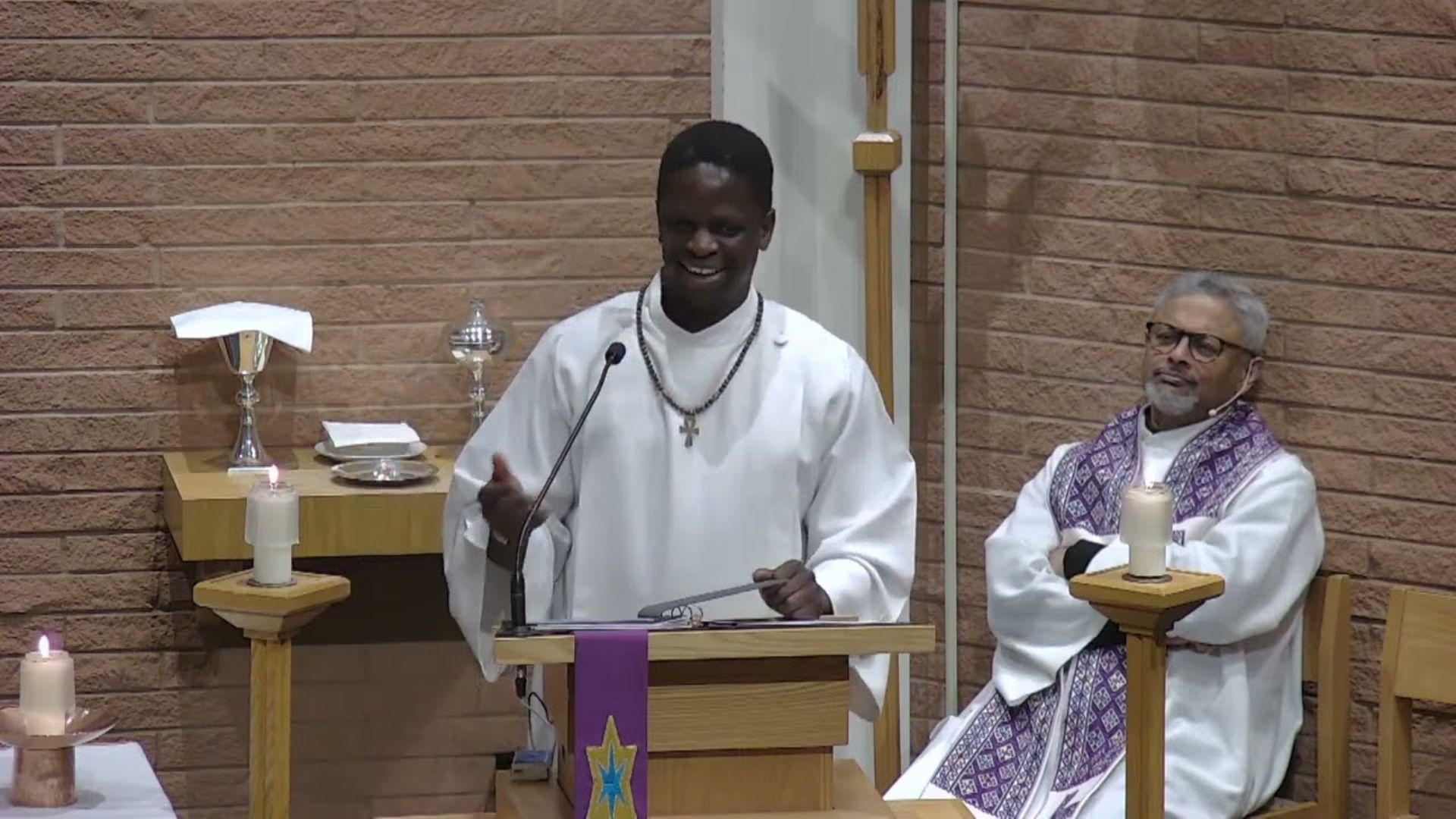

The Banquet of Justice: Coming Home
Explore true liberation beyond dependence, drawing lessons from US aid in Africa, the end of manna, and a radical reinterpretation of the Prodigal Son. Discover what it means to create a home of belonging for all.
The Paradox of Aid: A Global Reflection
During a recent UN meeting in West Africa, a powerful conversation emerged regarding the withdrawal of US aid, particularly within the African context. While official statements often lacked depth, private conversations revealed a striking contrast in perspectives.
thank God you have been in my eyes in a few weeks

This is cool.
Government representatives expressed fear over job losses and the disruption to essential services, with some countries relying on US aid for up to 70% of their health budget. Politicians worried about the impact on their leadership.
However, many civil society groups and ordinary people responded with surprising indifference, stating, "We don't see the money. Nothing has really changed."
"Why should my country be putting out $15 billion worth of minerals every year but then have to rely on 200 million of US aid? The math does not make sense."
This stark question highlights a deeper issue of dependence, prompting reflection on what it means to truly come home and achieve liberation.
From Manna to Sustenance: A Journey to Liberation
We see a similar journey in the story of Joshua and the children of Israel. After years of dependence on manna in the wilderness, they entered the promised land and began to eat the produce of the land. This shift signifies a move from unpredictable provision to the fruits of their own labor.
11 The day after the Passover, on that very day, they ate unleavened bread and roasted grain from the produce of the land.
12 And the day after they had eaten from the produce of the land, the manna ceased. There was no more manna for the Israelites, so that year they began to eat the crops of the land of Canaan.
Dependency, whether on divine manna or external aid, means living on the edge, with no say or control over one's future. This mirrors how colonization often conditions us to rely on the 'manna' of those in power, perpetuating a cycle of dependence.
True liberation is when we reclaim our ability to nourish ourselves—economically, spiritually, and communally.
God's Radical Restoration: Beyond Guilt and Condemnation
A beautiful psalm speaks to the joy of being restored and not condemned. This liberation comes from feeling whole, even in poverty, without having to follow the 'rules of the master' on whom we are dependent.
Colonial Christianity has often weaponized guilt, framing gratitude as passive obedience. We hear questions like, "Are you not grateful for the aid?" or "How dare you criticize the church that helped?"
Yet, God is not a harsh judge, but a healer who removes barriers to ensure full belonging for all. True healing is about restoration to our authentic selves, and true reconciliation is about forging pathways to restoration, finding love even in the most difficult circumstances.
Reimagining Homecoming: The Banquet of Justice
The story of the Prodigal Son is often interpreted as a personal moral failure, emphasizing the son's return to submission. However, we can reimagine this narrative as "Coming Home, the Banquet of Justice."
12 The younger son said to him, ‘Father, give me my share of the estate.’ So he divided his property between them.
13 After a few days, the younger son got everything together and journeyed to a distant country, where he squandered his wealth in wild living.
14 After he had spent all he had, a severe famine swept through that country, and he began to be in need.
15 So he went and hired himself out to a citizen of that country, who sent him into his fields to feed the pigs.
16 He longed to fill his belly with the pods the pigs were eating, but no one would give him a thing.
17 Finally he came to his senses and said, ‘How many of my father’s hired servants have plenty of food? But here I am, starving to death!
18 I will get up and go back to my father and say to him, “Father, I have sinned against heaven and against you.
19 I am no longer worthy to be called your son. Make me like one of your hired servants.”’
20 So he got up and went to his father. But while he was still in the distance, his father saw him and was filled with compassion. He ran to his son, embraced him, and kissed him.
21 The son declared, ‘Father, I have sinned against heaven and against you. I am no longer worthy to be called your son. ’
22 But the father said to his servants, ‘Quick! Bring the best robe and put it on him. Put a ring on his finger and sandals on his feet.
23 Bring the fattened calf and kill it. Let us feast and celebrate.
24 For this son of mine was dead and is alive again! He was lost and is found!’ So they began to celebrate.
25 Meanwhile the older son was in the field, and as he approached the house, he heard music and dancing.
26 So he called one of the servants and asked what was going on.
27 ‘Your brother has returned,’ he said, ‘and your father has killed the fattened calf, because he has him back safe and sound.’
28 The older son became angry and refused to go in. So his father came out and pleaded with him.
29 But he answered his father, ‘Look, all these years I have served you and never disobeyed a commandment of yours. Yet you never gave me even a young goat so I could celebrate with my friends.
30 But when this son of yours returns from squandering your wealth with prostitutes, you kill the fattened calf for him!’
31 ‘Son, you are always with me,’ the father said, ‘and all that is mine is yours.
32 But it was fitting to celebrate and be glad, because this brother of yours was dead and is alive again; he was lost and is found.’”
Homecoming in many traditions is shaped by colonial narratives: you leave, you succeed, you return with abundance. If you return broke, there's shame. But home should be a place of belonging, protection, and freedom. When we leave home, we are often dispossessed, losing these protections.
The youngest son's journey reflects not just personal failure, but the experience of being alienated from one's inheritance and forced to survive under unjust systems.
The elder son's bitterness reveals how systems can create competition, making us believe that someone else's restoration is our loss. He lost nothing, yet felt stripped because his brother was welcomed.
The father's response is radical justice. He broke social norms, restoring his son's dignity with a communal feast, demonstrating that the banquet of justice is about the reclamation of abundance, not scarcity. It is about love, caring, reconciliation, and restoration for all.
An Invitation: Creating a Home Where No One Has to Leave
The banquet of justice invites us to reimagine a world where we all can have enough and coexist. It challenges us to confront the systems that continue to alienate people from their dignity and belonging.
- What systems in our world create dispossession?
- How are we sharing the abundant resources God has blessed us with?
We often focus on scarcity amidst abundance. Consider the church: it holds immense power and resources—prime real estate, influence, and the ability to gather people without coercion. The question is, what are we doing with it?
The banquet of justice calls us to a moment of truth and reckoning: Are we celebrating what we have, or still clamoring for more?
A Final Reflection
The story of the Prodigal Son is not just about moral failure or scarcity. It is a story of a banquet of celebration, where abundance remained, yet one felt loss because another gained.
The real question before us is not whether we are worthy to return home, but: How do we create a home where no one has to leave in the first place?

The only way I could do