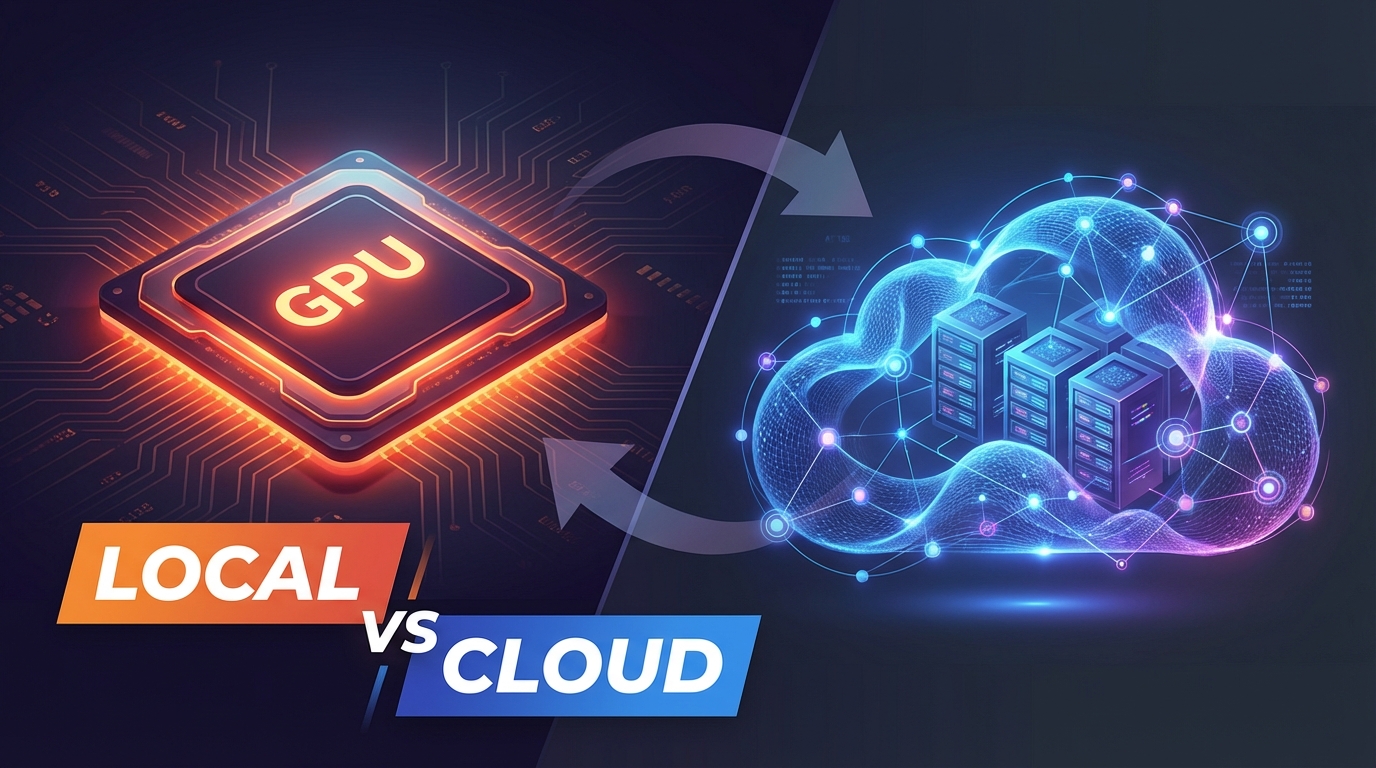

Local vs Cloud: The AI Hardware Showdown
Compare high-end consumer GPUs with cloud AI services to decide the best approach for your workloads.
Introduction
Running artificial intelligence locally is a growing trend. But is a powerful graphics card in your home or a subscription to a cloud service the better choice? Let's weigh the pros and cons.
Local GPUs offer total control. You own the hardware, the software, and the data. There are no vendor lock-in issues, and you have full authority over your environment.
When you run AI models locally, your data never leaves your machine. This is crucial for privacy-sensitive tasks like medical analysis or personal creative work.
With a high-end card, you can process large batches of data without waiting for network transmission. Latency is effectively zero, making real-time interaction seamless.
High-end consumer GPUs are expensive. A flagship card can cost thousands of dollars, plus the electricity required to run it 24/7 and the cooling equipment needed.
Hardware has physical limits. You cannot simply "add more" GPU to process larger models. You are bound by the single card you purchased.
Operating a powerful desktop requires maintenance. You deal with thermal throttling, fan noise, driver updates, and hardware failures.
Cloud services provide virtually unlimited scaling. You can access massive clusters of A100 or H100 GPUs whenever you need them, regardless of your desk setup.
Pay-as-you-go models can be cheaper for low-volume workloads. You don't pay for electricity or hardware depreciation if you only need a GPU for a few hours a week.
Every interaction requires sending data over the internet. This introduces latency, which can feel sluggish for real-time applications or large file transfers.
Costs can explode. Heavy workloads or extended training runs can result in surprise bills, especially if you are not monitoring GPU utilization closely.
Choose local if you value privacy, speed, and ownership.
Choose cloud if you need massive power, low upfront costs, or don't want to manage hardware.